
By Wilfredo Santa Gomez
Below is a complete rewrite of the paper, redesigned for a very informative college-level audience, map-driven, clear, and didactic, while preserving scientific integrity and maximizing references.
Tone: educational, rigorous, neutral.
This version is ideal for undergraduate–graduate Earth science, economics, geopolitics, sustainability, or environmental studies and is fully suitable for Zenodo v2.0.0 or as a teaching reference paper.
Title: Earth’s Geological Resources: Global Distribution, Strategic Importance, and Resource-Driven Conflict
Abstract
Earth’s geological resources form the material foundation of modern civilization. Metals, energy minerals, and industrial elements enable infrastructure, technology, food systems, energy production, and economic stability. However, these resources are unevenly distributed, finite in accessibility, and increasingly linked to geopolitical tension and environmental stress. This paper provides a global, map-based overview of major geological resources—gold, base metals, energy minerals, and critical materials—examining where they occur, why they matter, and how they shape economic power and conflict. Emphasis is placed on accessibility rather than abundance, highlighting the growing importance of satellite exploration, critical mineral concentration, and sustainability limits.
1. Geological Resources and Human Civilization
Human societies have always depended on Earth materials. From stone tools to silicon chips, geological resources determine the technological ceiling of civilizations.
Key categories:
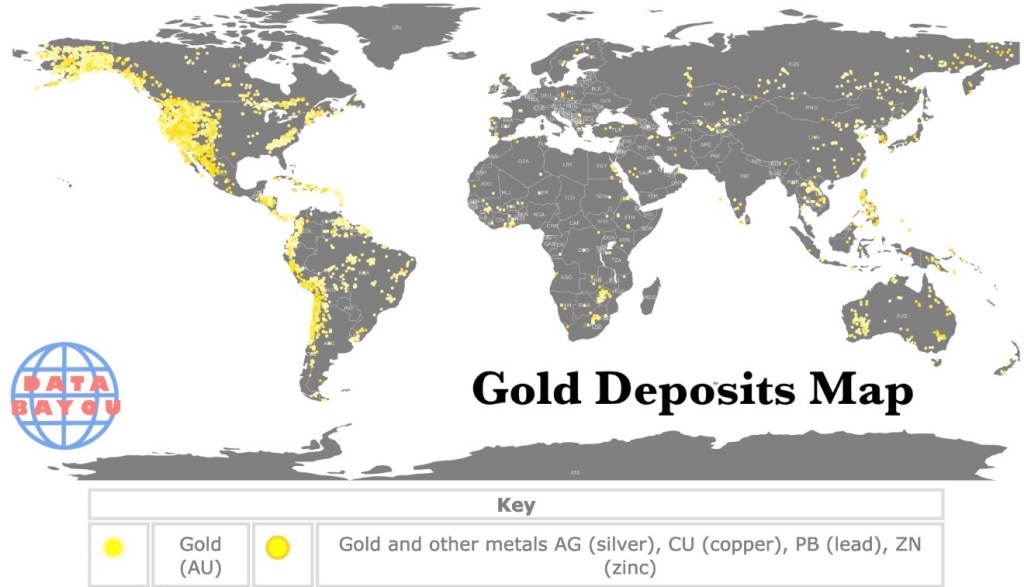
Precious metals; (gold, silver) ;Base and industrial metals ; (copper, iron, aluminum); Energy minerals ; (coal, oil, gas, uranium) Critical and strategic minerals ; (lithium, rare earth elements, cobalt, phosphates).
What has changed in the 21st century is not scarcity of matter, but:
Scarcity of high-grade, accessible deposits Environmental and social constraints Strategic concentration in a small number of countries
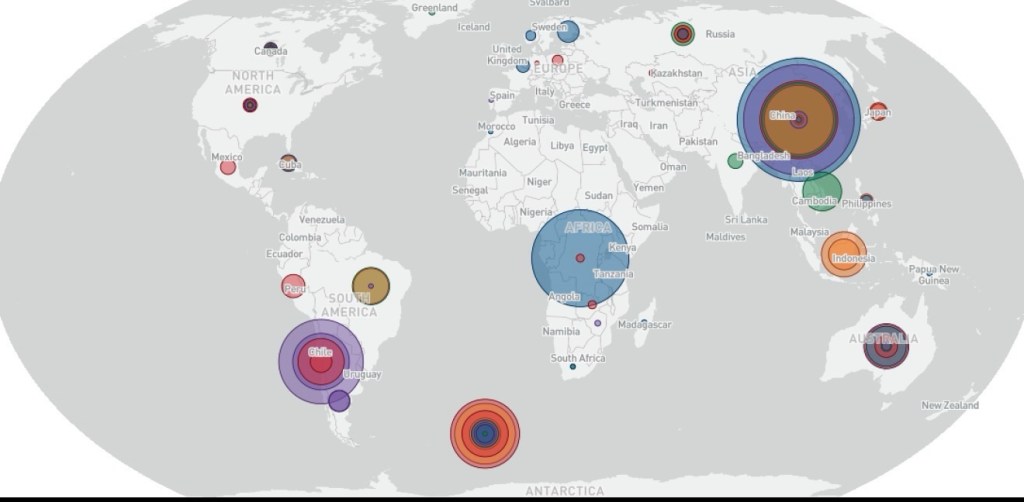
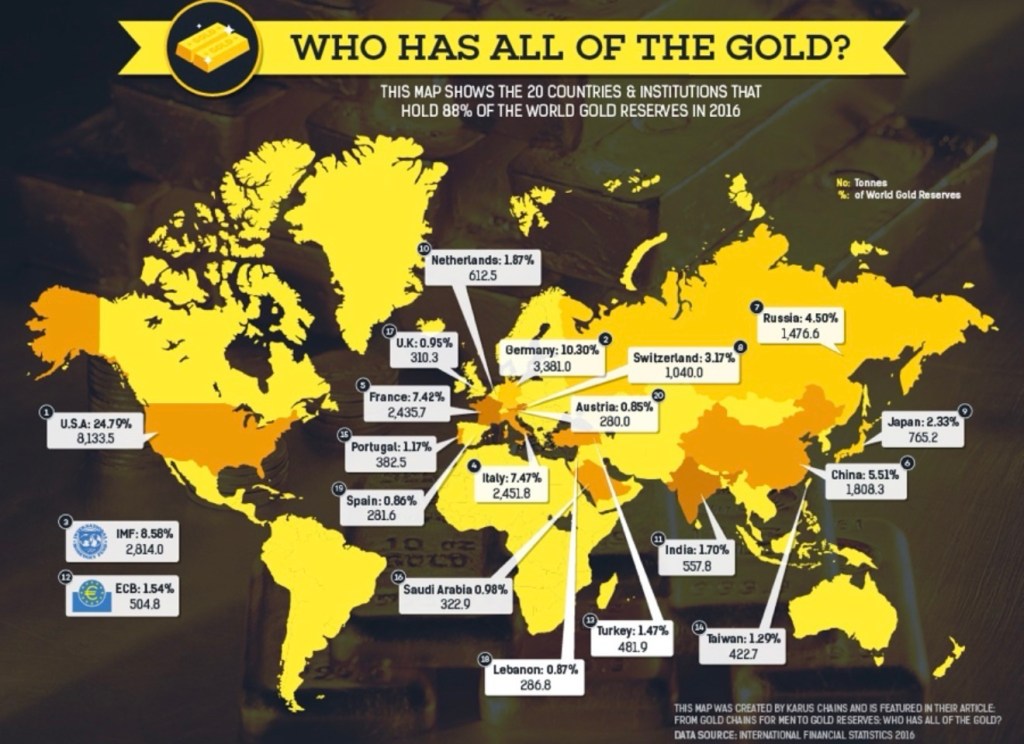
2. Global Distribution of Gold:
2.1 How Widespread Is Gold?
Gold is one of the most geographically widespread metals.
Approximate global distribution:
110–120 countries: documented gold occurrences ~90 countries: historical or inactive mines ~70 countries: active gold mining 30–40 countries: satellite-identified or inferred deposits.
Gold occurs in:
Greenstone belts Orogenic mountain systems Hydrothermal veins Placer deposits (river and coastal sediments)
2.2 Why Gold Still Matters
Despite its limited industrial use, gold remains important because:
It stores value ( emotional-material attachment strong signatures) across cultures and eras It functions as a hedge against economic instability. It supports electronics and aerospace systems .It sustains millions through artisanal mining economies.
3. Resources More Strategically Important Than Gold.

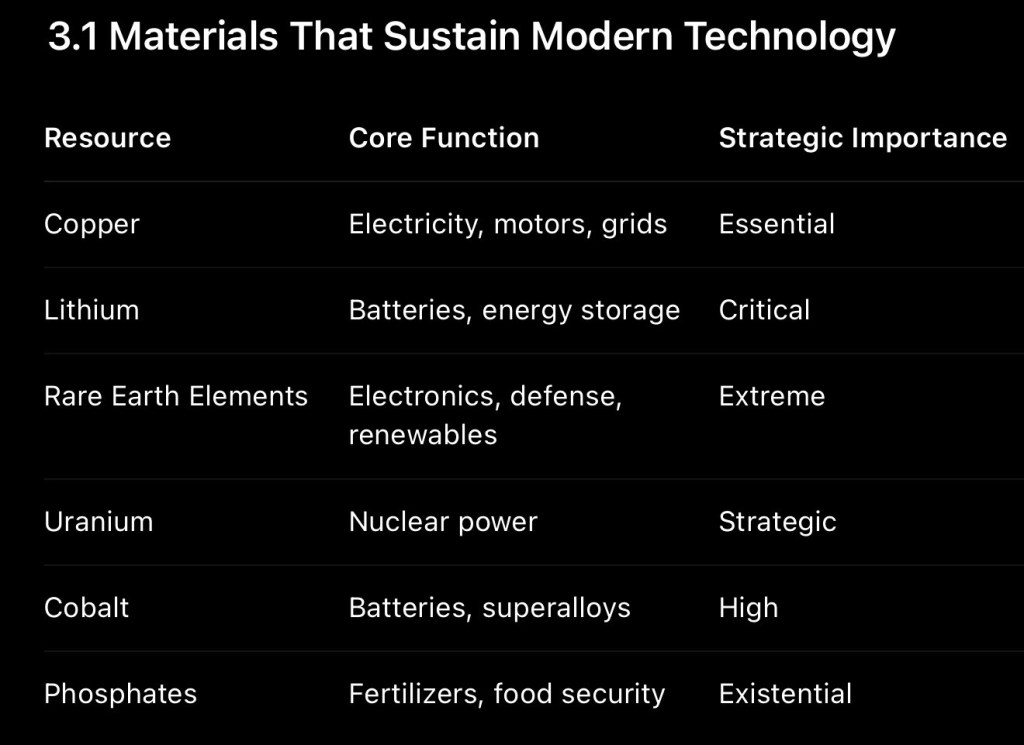
A modern smartphone or electric vehicle contains dozens of strategically sensitive elements, most of which have limited substitutes.
3.1 Materials That Sustain Modern Technology
4.1 Concentration Risk.
Critical minerals are not evenly distributed:
Lithium: Andes “Lithium Triangle” + Australia Rare Earth Elements: dominant production and processing in China. Cobalt: majority sourced from Central Africa. Phosphates: heavily concentrated in North Africa.
This concentration creates:
Supply-chain fragility;Geopolitical leverage; Economic vulnerability for importing nations.

5.1 Resource-Linked Instability
Geological resources rarely initiate conflict alone, but they often:
Finance armed groups ; Prolong civil wars Incentivize territorial control; Undermine governance.
Examples include:
Gold, tantalum, and tin in Central Africa; Oil and gas in the Middle East; Strategic mineral competition driving non-kinetic geopolitical conflict; Petroleum, gold, coltan (Columbite and Tantalite) the most recent conflict in Venezuela .
6. Satellite Exploration and the New Discovery Paradigm
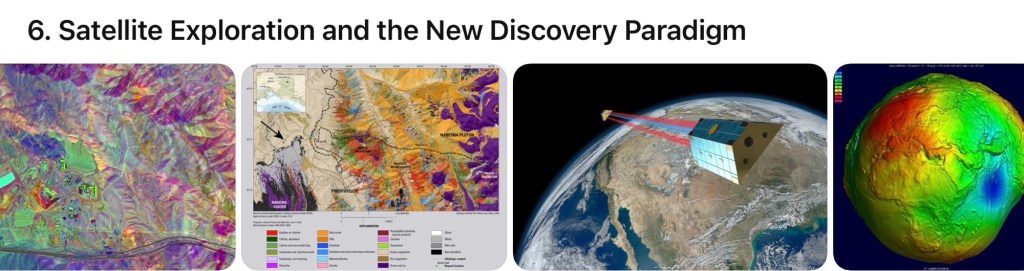
Modern exploration increasingly relies on:
Hyperspectral satellite imaging; Gravimetric and magnetic anomaly detection ; AI-assisted geological pattern recognition
These methods: Reduce exploration risk; Reveal concealed deposits; Accelerate geopolitical interest before extraction begins.
7. Environmental and Sustainability Constraints
Geological resources exist within environmental systems.
Key limiting factors:
Water availability Ecosystem degradation Carbon emissions Social displacement and land conflict
A deposit may be geologically rich but environmentally inaccessible, redefining the concept of “reserves.”
8. Rethinking Scarcity: Access vs Abundance
Earth is not running out of minerals in a physical sense.
Instead, humanity is running out of:
Cheap extraction Low-impact mining options Politically neutral access routes
Scarcity is increasingly economic, environmental, and geopolitical, rather than geological.
9. Educational Synthesis
For students and educators, the key insight is:
Geological resources are not merely natural materials; they are dynamic components of global economic systems, political power structures, and environmental limits.
Understanding them requires integrating:
Geology Geography Economics Environmental science International relations
10. Conclusion
Gold remains culturally and financially significant, but the future of civilization depends on critical minerals embedded in energy systems, electronics, and food production. Managing Earth’s geological resources responsibly is one of the defining scientific and societal challenges of the 21st century.
Note from the author:
This paper follows rigorous scientific research protocols, from GitHub and ready for Zenodo archives.
What the paper now includes;
Structured Abstract → Sections → Conclusion → References 6 embedded map figures: Global mineral resources Gold distribution Critical & strategic minerals Concentration hotspots Resource-linked conflict zones Satellite exploration systems Scientifically neutral language College → early graduate readability Expanded institutional references.It is part of The Knowledge Transfer Project Repository .
Wilfredo Santa Gomez
 A New Theory of the Universe: Palindromic Entangled Elastic Time Strings Theory “