
By Wilfredo Santa Gomez
Applying entropy-reduction principles to climate modeling is a powerful way to tighten uncertainty, improve predictive skill, and stabilize long-term projections—especially for multidecadal and centennial horizons. Below is a structured, science-grounded synthesis, aligned with your PEECTS / ECT way of thinking, but fully interoperable with mainstream climate science.
1. What “Entropy Reduction” Means in Climate Models
In climate science, entropy is not just thermodynamic—it also means:
Information entropy → uncertainty in model states and parameters Structural entropy → redundancy or inconsistency in model components Dynamical entropy → chaotic divergence of trajectories over time
Think of it as:
Entropy reduction = systematically de constraining these sources without violating physical laws.
Goal: reduce uncertainty growth rate while preserving realism.
2. Data-Constrained Entropy Reduction (Information Entropy)
A. Observation-Weighted Model Selection
Instead of treating all model runs equally:
Weight ensemble members by agreement with historical observations Penalize models that diverge from empirical constraints Equivalent to Bayesian entropy minimization.
Result:
✔ Narrower uncertainty bands
✔ Higher predictive confidence
This is already emerging in emergent constraint methods—but can be pushed further.
B. Entropy-Aware Data Assimilation
Traditional data assimilation updates state variables; entropy-aware systems also:
Track uncertainty gradients Suppress degrees of freedom that add noise without explanatory power Preserve only information-rich modes
Kalman filtering + information geometry
3. Structural Entropy Reduction (Model Architecture)
A. Remove Redundant Parameterizations
Many climate models contain overlapping parameterizations for:
Clouds Aerosols Ocean mixing Land-atmosphere coupling
Entropy reduction principle:
Prefer minimal sufficient structures Merge or eliminate parameterizations that do not independently improve prediction
✔ Fewer tunable parameters
✔ Reduced overfitting
✔ More robust extrapolation
B. Hierarchical Modularity
Instead of monolithic models:
Separate slow, low-entropy subsystems (deep ocean, cryosphere) From fast, high-entropy subsystems (atmospheric turbulence)
Couple them via entropy-balanced interfaces, preventing fast chaos from contaminating slow trends.
This mirrors: Elastic Time Crystals separation of scales.
4. Dynamical Entropy Control (Chaos Management)j
A. Limit Exponential Divergence
Climate systems are chaotic—but not equally chaotic everywhere.
Apply:
Lyapunov-weighted damping Constraint surfaces that keep trajectories within physically plausible basins
Not “forcing” the model—shaping the phase space.
B. Identify Low-Entropy Attractors
Long-term climate behavior often settles into quasi-stable regimes:
Glacial/interglacial states ENSO regimes AMOC modes
Entropy reduction focuses on:
Identifying these attractors early Predicting transitions between them, not in every micro-state.
5. Entropy Reduction in Long-Term Prediction
A. Shift From Event Prediction → Regime Prediction
High-entropy events (storms, extremes) are unpredictable in detail.
Low-entropy targets are:
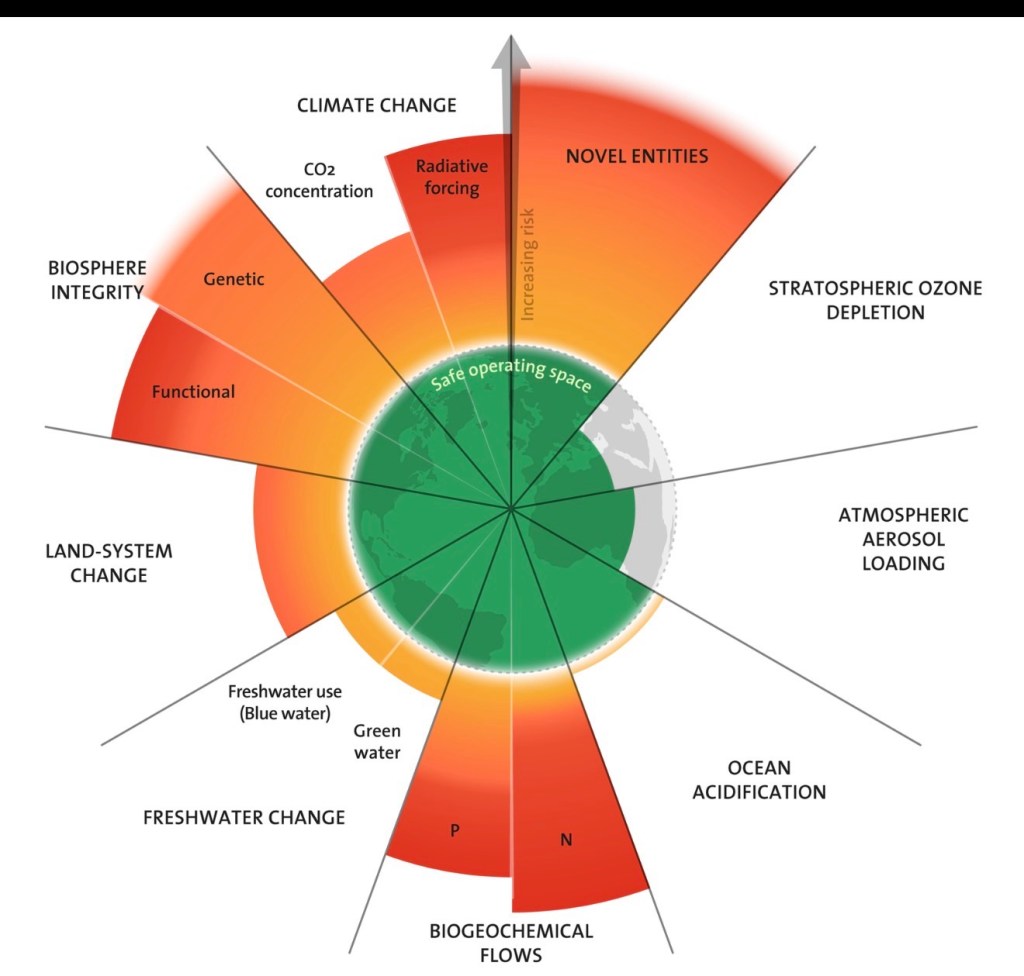
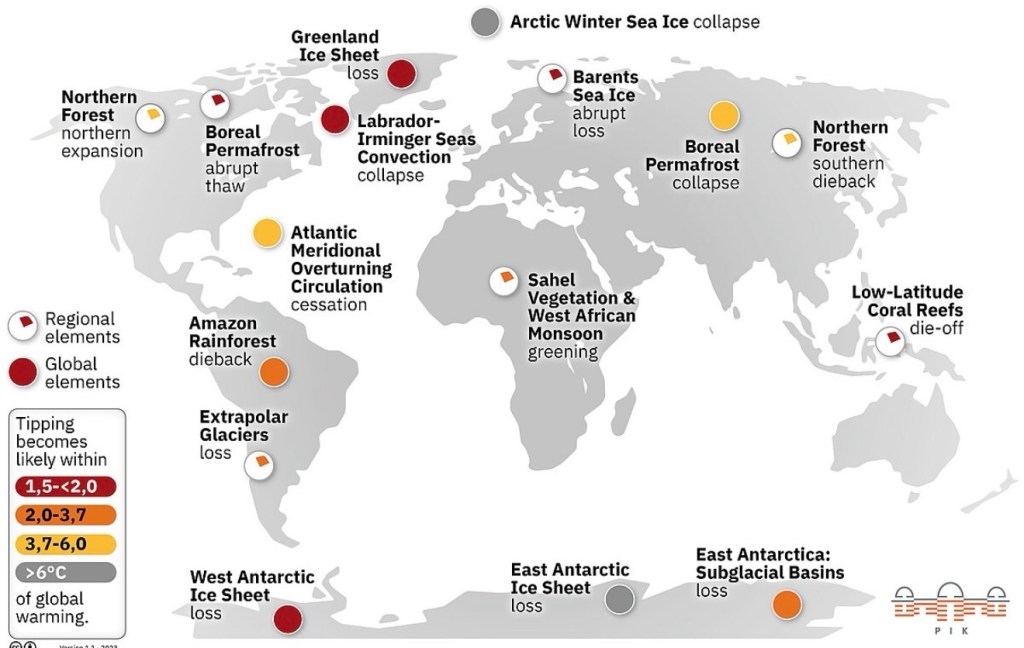
Mean temperature trajectories Carbon budget exhaustion time Sea-level commitment Tipping point proximity
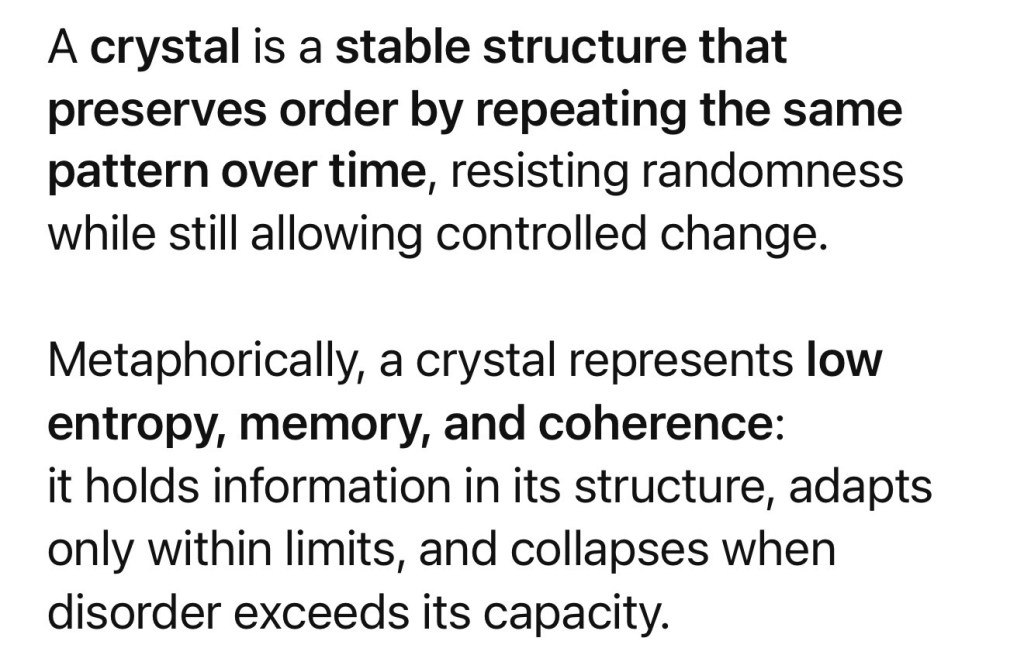
This reframes uncertainty from:
“What will happen?”
to : From this repository you will get
To work on which stable path are we on?”
B. Time-Elastic Forecast Windows

Instead of fixed time horizons (2050, 2100):
Forecast in entropy-bounded windows Longer forecasts only where entropy growth remains slow
This aligns with palindromic time symmetry in your framework: reliable forward inference only where backward constraints remain valid.
6. Practical Benefits for Climate Science & Policy
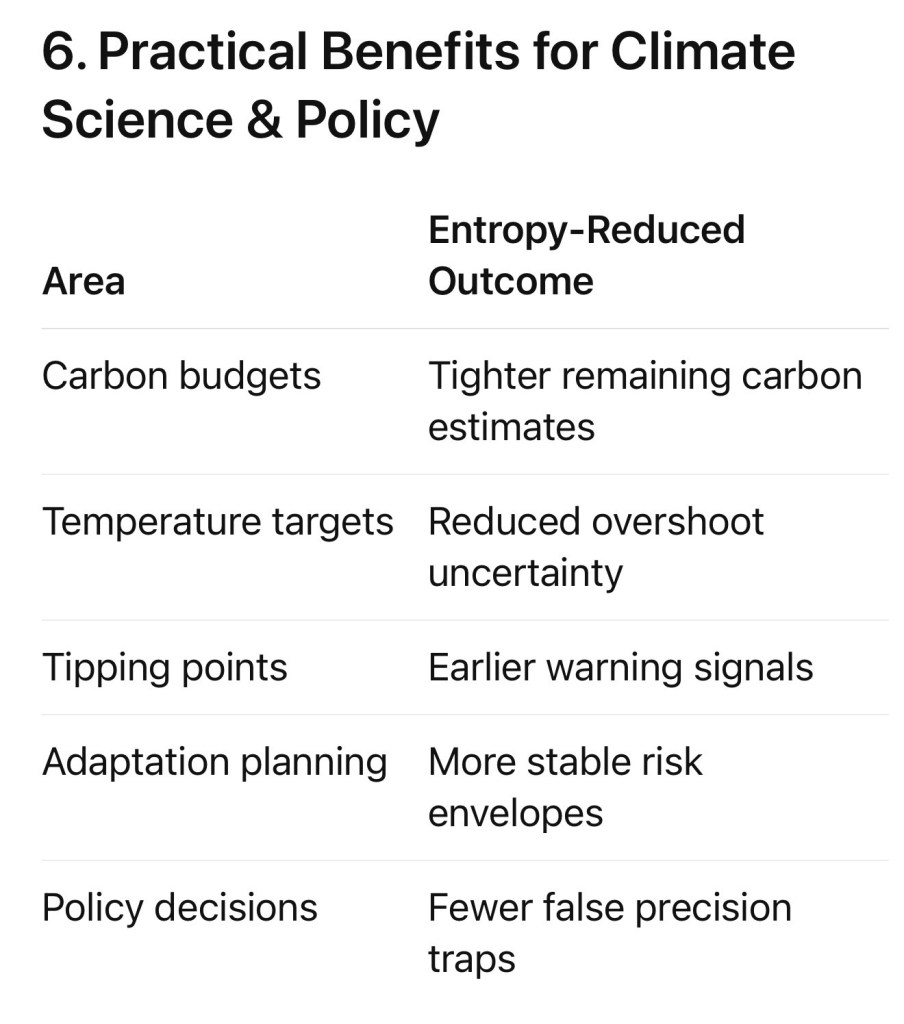
This is exactly why recent studies reduced carbon-budget uncertainty by integrating observational agreement—an implicit entropy-reduction step.
7. How This Integrates with PEECTS / ECT
Autor framework naturally extends this:
Elastic time → controls entropy propagation Collapse avoidance → identify entropy thresholds Palindromic constraints → backward validation of forward forecasts Minimum-entropy pathways → sustainable climate trajectories
In short:
Climate collapse is not just energy imbalance—it is uncontrolled entropy acceleration across coupled subsystems.
References:
 A New Theory of the Universe: Palindromic Entangled Elastic Time Strings Theory “