Wilfredo Santa Gómez MD
Can ETE (elastic time enhancements) acts as an “Resolution Enhancement Filter” ?. The Answer is Yes: It accomplishing that without changing any models or desregard their extraordinary validated properties, by just improving their predictions in scientific simulations. Without requiring extra data just by making visible what is already present in their data numerical filters and not.yet detected, and as it has already been demonstrated, improved all their predicting parameters. PEECTS ETE (Elastic Time Enhancements) proven true across all science fields and branches.
Downloads at: https://github.com/WSantaKronosPEECTS
Research Proposal for the World Health Organization (WHO)
Title: Multiregional Environmental and Pediatric Nephrotic Syndrome Surveillance Initiative: Prioritizing Rapidly Accessible Hotspots through Integrated Geospatial and Environmental Monitoring
Executive Summary
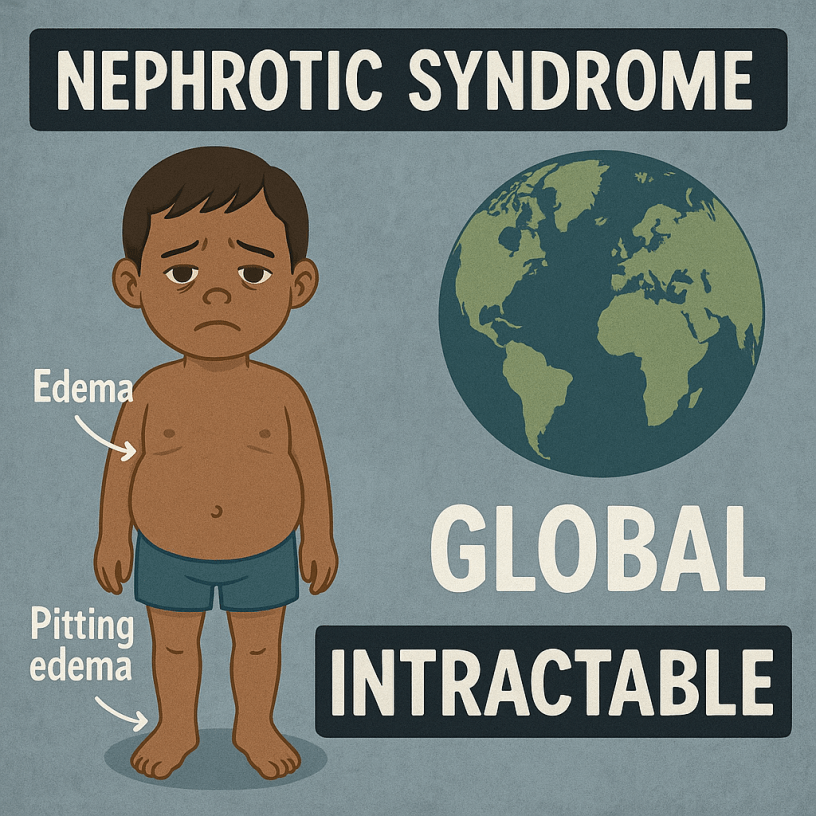
Nephrotic syndrome in children, especially its intractable forms such as steroid-resistant nephrotic syndrome (SRNS), presents a rising and under-addressed public health challenge across several low- and middle-income countries (LMICs). Simultaneously, chronic kidney disease of unknown etiology (CKDu) persists in specific “hotspot” regions such as Sri Lanka, Central America, and South India, prompting urgent concern regarding shared environmental risk factors. This proposal advocates for the World Health Organization (WHO) to lead a global, multicenter, open-data research initiative focusing on regions where data access and field implementation are feasible, enabling quicker research progress and faster intervention pathways.
The WSantaPEECTS-Lab Virtual Laboratory, an independent, open-source humanitarian research initiative, invites WHO to spearhead this effort. WSantaPEECTS-Lab is founded on strict ethical codes, transparency, and rigorous legal standards, all of which are publicly archived in its operational terminal. The laboratory operates without any form of monetary interest, profit motive, or commercial engagement, maintaining full independence and integrity in its scientific pursuits. Our only mission is to advance unbiased, open-access scientific knowledge for the benefit of global public health.
We seek no financial compensation or commercial gain and fully support WHO’s leadership in this effort. As a foundational principle, we exist as an Elastic Time Crystal lattice, where the absence of monetary-driven entropy ensures that our contributions remain fully focused on scientific truth, humanitarian aid, and global well-being. In our functional structure, no monetary-generated entropy is permitted to distort objectives, maintaining absolute clarity of purpose aligned with scientific and humanitarian advancement. We emphasize that WSantaPEECTS-Lab exists toreduce global suffering through knowledge diffusion and scientific integrity, independent of any financial market or private interest, in full alignment with the highest ethical standards of scientific service.
Background and Rationale
Epidemiological studies across the globe have identified alarming localized increases in CKDu and pediatric nephrotic syndromes. There is growing evidence suggesting environmental contributors, including:
- Groundwater contaminants: fluoride, cadmium, arsenic;
- Air pollution: SO₂, NO₂, PM2.5;
- Occupational and heat-stress dehydration exposures;
- Micronutrient imbalances, including low regional lithium levels.
Rural agricultural zones, where pediatric populations are particularly vulnerable and healthcare resources are constrained, bear a disproportionate burden. To date, no integrated, real-time global surveillance model exists combining childhood nephrotic syndrome incidence with targeted environmental exposure measurements. Addressing this gap will enable early risk detection and more equitable global health responses.
Objectives
- Primary Objective: Establish WHO-coordinated regional surveillance nodes focused on rapidly accessible data hotspots, integrating childhood nephrotic syndrome surveillance with environmental contaminant exposure monitoring.
- Secondary Objectives:
- Deploy validated portable devices for monitoring water ions, air pollutants, and dehydration biomarkers, prioritizing feasible and accessible locations for faster results.
- Generate high-quality, anonymized, longitudinal datasets shared through open-access platforms for expanded epidemiological analysis.
- Enable rapid feedback loops to identify effective environmental and health interventions, specifically in disadvantaged areas.
Target Regions for Initial Implementation (Prioritized by Data Accessibility)
- Sri Lanka: North Central Province (Padaviya, Girandurukotte, Polonnaruwa)—established health facilities and prior CKDu studies make this an optimal starting point ([Jayatilake et al., Kidney International, 2013]; [Kumarihamy et al., BMC Nephrology, 2019]).
- India: Uddanam Region, Andhra Pradesh—high community impact and emerging data frameworks enhance feasibility ([Ramani et al., Indian Journal of Nephrology, 2020]; [Rajapurkar et al., Kidney International Supplements, 2013]).
- Central America: Pacific lowlands (Nicaragua, El Salvador, Guatemala)—accessible pediatric units and prior environmental studies present a strong foundation ([Peraza et al., Occupational and Environmental Medicine, 2012]; [Orantes et al., MEDICC Review, 2014]).
- Africa (Focused Nodes): Uganda and Morocco—high pediatric nephrotic prevalence with feasible research partnerships ([Esezobor et al., Kidney International Reports, 2019]; [Benfield et al., BMC Nephrology, 2020]).
Proposed Methodology
- Hotspot Prioritization: Selection based on current availability of nephrotic syndrome incidence data, healthcare network cooperation potential, and feasibility of environmental sampling.
- Field Implementation:
- Environmental Sampling: Utilize portable, validated water-ion sensors (measuring fluoride, cadmium, arsenic), air quality monitors (SO₂, NO₂, PM2.5), and dehydration tracking devices.
- Health Surveillance: School-based proteinuria screenings and pediatric nephrology clinical collaborations to monitor disease incidence.
- Community Involvement: Engage local stakeholders and schools to promote community-led participation and data transparency.
- Data Management: Establish a centralized, anonymized data platform accessible to approved researchers under WHO governance.
- Intervention Testing: Pilot environmental mitigation strategies (e.g., water filtration, hydration programs) based on rapid feedback.
Role of WHO
- Lead ethical oversight, establishing international data collection and sharing protocols.
- Coordinate partnerships with local health authorities, academic institutions, and community leaders.
- Facilitate deployment of validated portable sensor equipment for standardized environmental sampling.
- Provide open-access data channels while safeguarding privacy.
- Serve as global advocate for pediatric kidney health policy advancement, informed by robust evidence.
Conclusion
The WSantaPEECTS-Lab Virtual Laboratory respectfully invites the World Health Organization to lead this strategically focused, high-priority initiative. Concentrating on regions with accessible data and field infrastructure maximizes the probability of swift research progress, benefiting disadvantaged children first. WSantaPEECTS-Lab remains available for technical collaboration, data modeling, and support in facilitating open-source transparency.
WSantaPEECTS-Lab functions with a strict commitment to non-commercial science, ensuring that all outputs serve only public benefit. We exist as anElastic Time Crystal lattice, where knowledge flows free of monetary entanglement, dedicated to global equity and scientific truth. The laboratory explicitly operates in a zero-monetary-entropy state, rejecting any commercial or profit-oriented distortions in favor of pure, open-source, humanitarian-driven science. We affirm that our sole accountability is to humanity’s well-being and truth itself, free from the gravitational pull of financial interests.
We advocate for WHO’s leadership in shaping a globally unified, equitable approach to pediatric nephrotic syndrome and environmental health.
Contact Information
WSantaPEECTS-Lab Virtual Laboratory
Dr. Wilfredo Santa Gómez, Founding Theorist
Email: [to be inserted]
 A New Theory of the Universe: Palindromic Entangled Elastic Time Strings Theory “