
The Genesis Team: An International Multidisciplinary Scientific Research Approach , Solving The Origins Of Life , Mother Of All Scientific Challenges.
I Will begin this article with one statement “Wilfredo something is impossible until is not “. I taught this to myself during my college years, going through one of those difficult times we all go through at certain points in life, I used to repeat it to myself and eventually proving myself right.
It became part of myself,my life,and during my residency training as a Harvard Medical School Faculty Member as a Chief Resident on my Fellowship Program,I used to repeat it to my Harvard Medical School rotating students. Many years later I made it part of one of my first published books, and the statement became very popular.
IMG_9509.jpeg
Introduction :
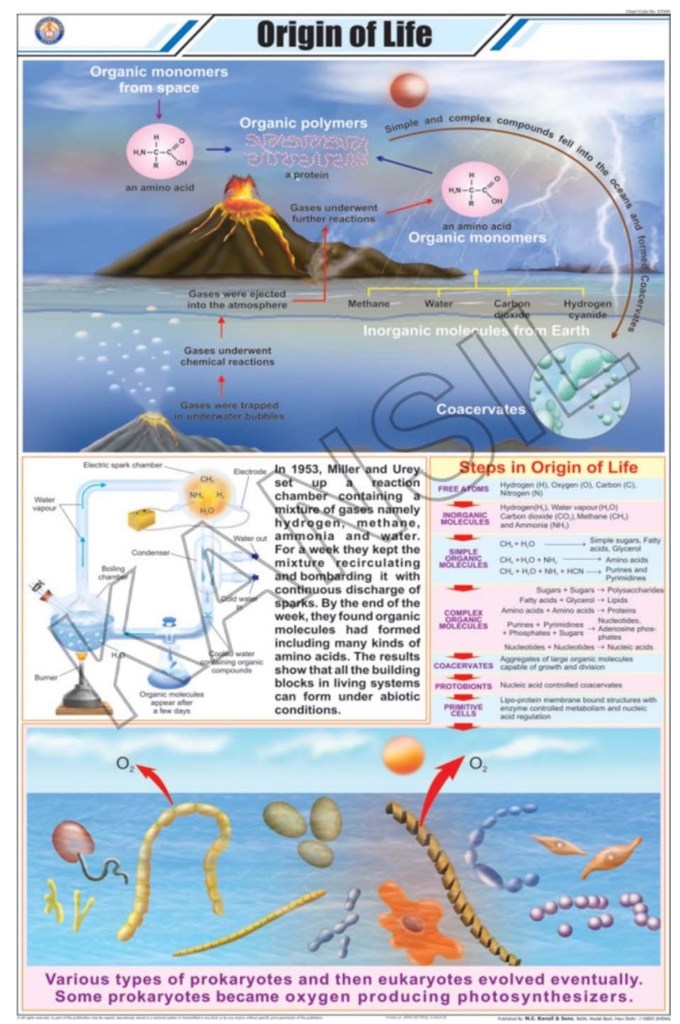
The origin of the first life form, also known as abiogenesis, is a complex and ongoing scientific inquiry. While the exact conditions and processes are not fully understood, several key factors are thought to have been necessary for the emergence of the first life form:
- Primordial Soup: It is hypothesized that early Earth’s atmosphere was rich in gases like methane, ammonia, water vapor, and hydrogen. These gases could have provided the raw materials for the formation of simple organic compounds.
- Energy Source: Some form of energy, such as lightning, volcanic activity, or UV radiation from the sun, would have been needed to drive chemical reactions and facilitate the synthesis of more complex molecules from simpler ones.
- Protection from Harmful Radiation: The early life forms would have required some form of protection from the harmful effects of ultraviolet radiation and other potentially damaging environmental factors.
- Chemical Reactions: Certain chemical reactions, such as polymerization and the formation of self-replicating molecules, would have been essential for the development of the molecular machinery of life.
- Encapsulation: The assembly of these molecules into a protective membrane or structure would have been crucial for creating a boundary between the internal and external environment, allowing for biochemical processes to occur without interference.
- Self-Replication: The ability to replicate and pass on genetic information would have been a pivotal step towards the emergence of life.
The exact sequence of events leading to the first life form is still a topic of active research and debate within the scientific community. However, these factors represent some of the key components that researchers believe were necessary for the initiation of life on Earth.
IMG_9508.jpeg
In theory, it is possible for AI to model and replicate the conditions of the origin of life as they were approximately 4 billion years ago. However, there are several challenges and limitations to consider.
Modeling the exact conditions of the Earth at that time would require a deep understanding of geological, chemical, and environmental factors such as the composition of the atmosphere, presence of key elements and molecules, temperature, and energy sources. This justifies the idea presented in this article of “ The Genesis Team “ as I named it, which obviously will requires the inclusion of scientists from all branches of the international scientific community.
While we have some knowledge of these conditions based on the ongoing process of scientific research evidence, there are still many unknown variables, challenges and uncertainties.
Once the “ The United Nations Genesis Team Committee” finished with the task of the TGT organization, the next phase of the challenging process will begin. Perhaps the answers will not come solely from replicating these conditions in a laboratory setting, that would prove to be be extremely complex, a different approach would emerge, involving the newly available materials, techniques, engineering and technology.
Maybe creating an environment that closely mimics the early Earth, may be facilitated by all the cumulative available knowledge from this “fountain of wisdom”.
Artificial intelligence Role
AI could potentially assist in simulating and analyzing large datasets related to the conditions of the early Earth, helping researchers to better understand and interpret the complexities involved. AI could also aid in developing computational models to simulate the interactions between various components of the early Earth environment.
despite the potential for AI to contribute to this area of research, fully replicating the exact conditions of the origin of life as they were 4 billion years ago remains a significant scientific challenge for the TGT to overcome current technology and knowledge gaps.
But perhaps with the current technology, on site labs could be built nearby the available active volcanic áreas (similarly to Iceland energy stations) in order to use it as energy sources and facilitators of the life origin conditions.
The idea of Solving The Origins Of Life, Mother Of All Scientific Challenges by A Multidisciplinary International Scientific Research Team“ and a Quantum Computer Feed by an AI computer modeling technology to simulate those original conditions, may bring us closer to solving this millennium enigmatic problem, by gaining valuable insights into the origins of life on Earth.
Who knows, it could also be one of the first tasks of “our firstborn quantum computer “.
From the soup ingredients most elementary perspective
The necessary ingredients for life as we understand it are often described using the acronym CHNOPS, which stands for carbon, hydrogen, nitrogen, oxygen, phosphorus, and sulfur. These elements are essential building blocks for living organisms and are integral to the formation of organic molecules such as proteins, nucleic acids, lipids, and carbohydrates.
- Carbon: This element is the foundation of organic chemistry and is present in all known forms of life. It forms the backbone of complex molecules and contributes to the diversity of organic compounds.
- Hydrogen: Hydrogen is the most abundant element in the universe and plays a crucial role in the structure of biological molecules, particularly in forming bonds with carbon, oxygen, and nitrogen.
- Nitrogen: Nitrogen is a key component of proteins and nucleic acids, which are essential for the structure and function of cells. It is also a vital element in the earth’s atmosphere and is converted by certain organisms into forms that can be used in biological processes.
- Oxygen: Oxygen is an essential component of water and is involved in cellular respiration, the process through which organisms generate energy. It is also a constituent of many organic molecules and is crucial for metabolism.
- Phosphorus: Phosphorus is a component of DNA, RNA, and ATP (adenosine triphosphate), which are central to genetic information storage and energy transfer within cells.
- Sulfur: Sulfur is found in certain amino acids and is important for the structure and function of proteins.
In addition to these elemental components, life also requires a suitable environment with liquid water, a source of energy (such as sunlight or chemical energy), and a range of other essential elements and molecules, including trace elements like iron, magnesium, and potassium.
Life as we know it also relies on the principles of biochemistry, cellular organization, genetic information storage and replication, and the ability to adapt and evolve. While these are not strictly “ingredients” in the traditional sense, they are fundamental aspects of life as it manifests on Earth.
Rare RNA/DNA life forms
Yes, there are living organisms that do not use RNA or DNA as their primary genetic material. For example, some viruses called retroviruses have the ability to reverse transcribe it into DNA once inside a host cell. Other viruses such as the hepatitis delta virus have RNA genomes that are not typical RNA or DNA, but rather a hybrid of both.
There are other examples of organisms with genetic material that differs from the typical DNA or RNA structure. For instance, certain bacteria and archaea use a modified form of DNA known as Z-DNA, which has a left-handed helix, as opposed to the right-handed helix found in standard DNA, and just to mention it, there are also organisms with genetic material that is not well understood or does not fit neatly into the categories of DNA or RNA.
Lets finish by saying that while the vast majority of living organisms on Earth use DNA or RNA as their primary genetic material, there are exceptions in the form of certain viruses, bacteria, and archaea that have unique genetic structures or use alternative genetic materials altogether.
Wilfredo Santa Gomez,MD
“Wilfredo something is impossible until is not “.(1983).
 A New Theory of the Universe: Palindromic Entangled Elastic Time Strings Theory “