
Dendrimers are a class of highly branched polymers with a unique three-dimensional architecture. They are nanometer-sized molecules that have a well-defined nucleus, multiple branching units, and an outer shell. The term “dendrimer” comes from the Greek word “dendron”, which means tree-like, reflecting its tree-like structure.
Dendrimers exhibit several interesting properties that make them attractive for various applications in fields such as medicine, materials science, and nanotechnology. Some key features of dendrimers include:
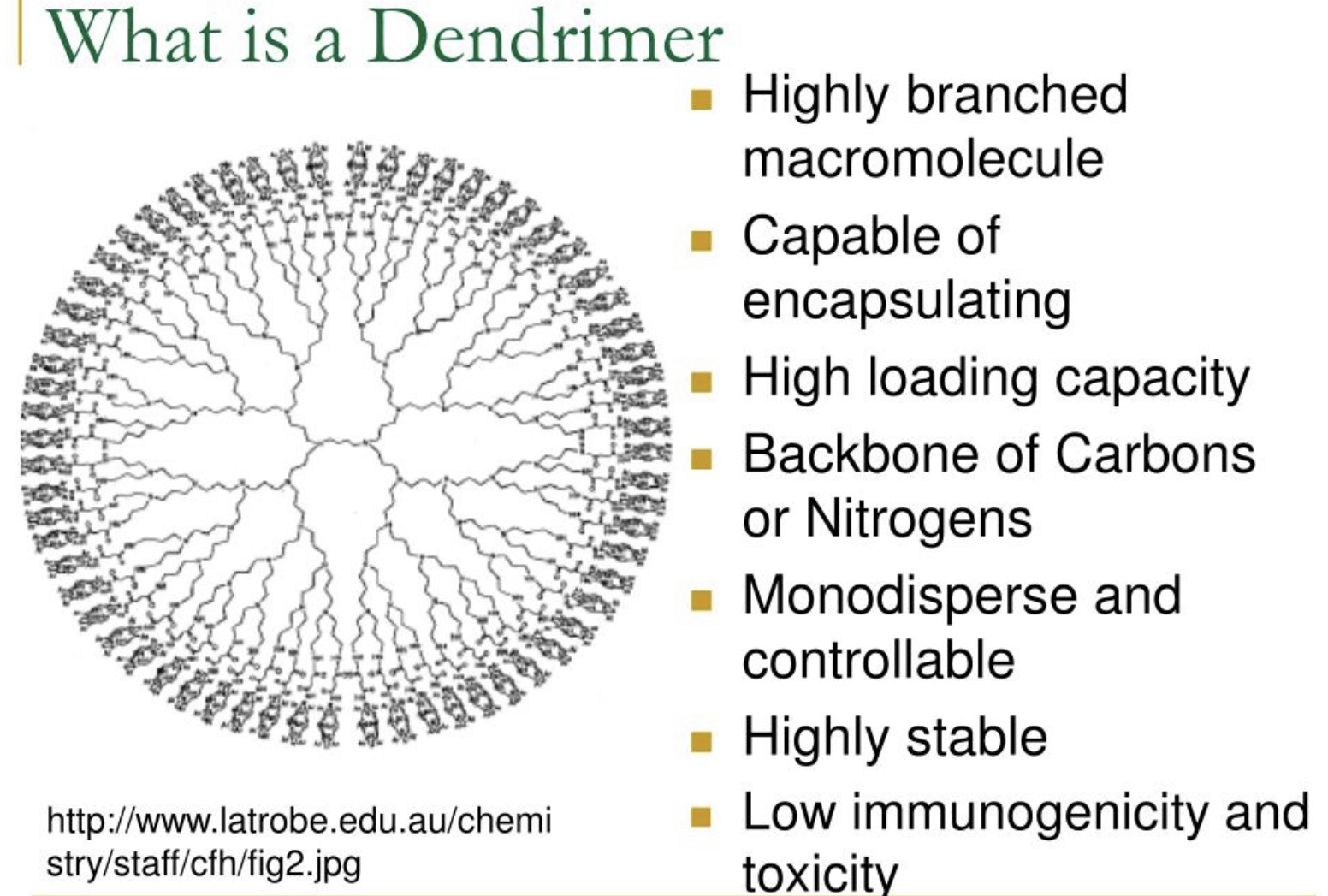
- Control of size and shape: Dendrimers can be precisely synthesized to have a specific size, shape, and molecular weight. This control allows you to tailor its properties and optimize its performance for different applications.
- Multivalency: Dendrimers have multiple functional groups on their surface, which can be chemically modified to bind different moieties or molecules. This multivalency provides enhanced binding capabilities, making dendrimers useful for drug delivery, imaging agents, and catalysis.
- High carrying capacity: Due to their unique structure, dendrimers can encapsulate or transport a large number of guest molecules within their internal cavities. This feature is especially valuable for drug delivery systems, where dendrimers can efficiently transport drugs to specific targets.
- Biocompatibility: Many dendrimers are biocompatible and exhibit low toxicity, making them promising candidates for biomedical applications. Its tunable surface chemistry allows for the binding of targeted ligands, allowing for specific interactions with biological systems.
- Solubility and stability: Dendrimers can be designed to have high solubility in water or in organic solvents, depending on the desired application. Furthermore, their dense and compact structure provides stability against degradation, making them suitable for long-term use.
Some notable applications of dendrimers include:
- Drug delivery: dendrimers can improve the solubility, stability and targeted delivery of drugs. They can encapsulate drug molecules within their structure or act as carriers to transport drugs to specific sites in the body.
- Imaging agents: dendrimers can be functionalized with imaging probes, such as fluorescent dyes or contrast agents, to improve visualization and detection of diseases or biological processes.
- Catalysis: Dendrimers can serve as catalysts due to their multiple active sites. They can be used in various catalytic reactions, including organic synthesis, environmental remediation, and energy conversion.
- Sensors: Dendrimers can be modified with sensing elements to detect specific analytes, such as chemicals or biomarkers, leading to applications in biosensors and diagnostic devices.
In summary, dendrimers are unique nanometer-sized molecules with a highly branched architecture. Their controllable size, shape, multivalency, and desirable properties make them versatile tools for numerous applications, especially in medicine, materials science, and nanotechnology
 A New Theory of the Universe: Palindromic Entangled Elastic Time Strings Theory “