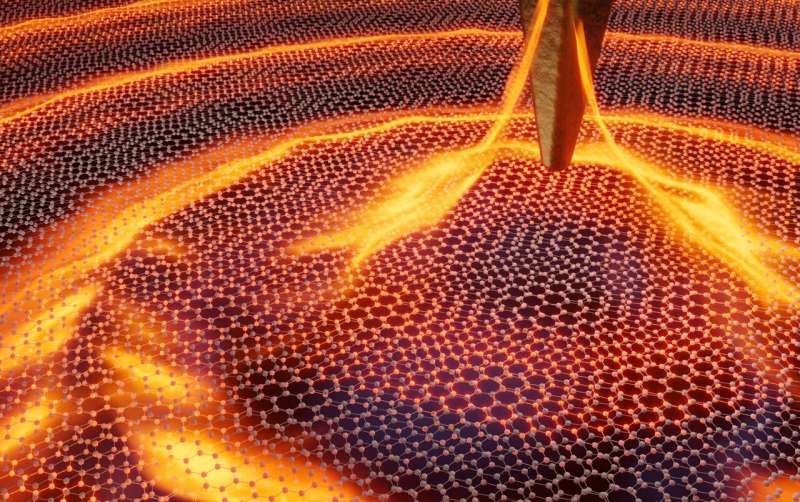
Researchers observe interband collective excitations in twisted bilayer graphene
— Read on phys.org/news/2021-10-interband-bilayer-graphene.html
#plasmons
What is Plasmons
The appearance of light through microscopic holes in metal foil made scientists aware of the existence of plasmons. Now, perforated metal foil is being used in a new type of biosensor that can trace a virus in blood and saliva samples.
The perforations are coated with different proteins that bind to antibodies known to be related to particular viruses. If antibodies accumulate on top of a group of holes, the plasmons cannot pull the light through, allowing the virus to be seen.
A whole new light
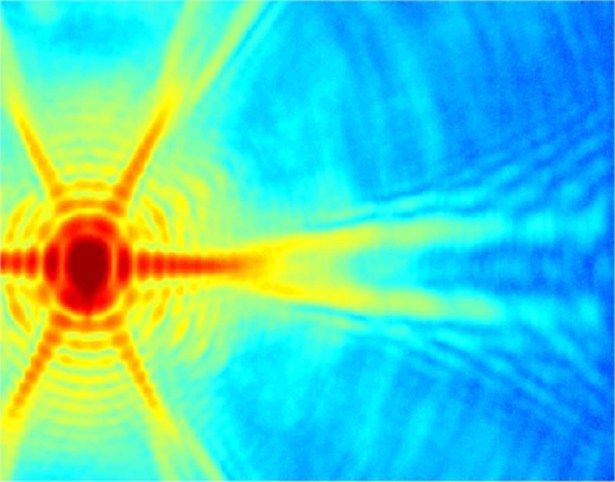
Plasmons are electron waves that are generated when light is aimed at a metal surface. Because their wavelengths are at least 10 times shorter than the wavelengths of visible light, they can carry both light and information through even the most microscopic passageways and networks.
Thomas Ebbesen held a thin sheet of gold foil up against the light and watched, surprised, as the light filtered through the foil. It must be an error, he thought, because according to everything we know about classical optics, that should not have been possible.
A Norwegian-born physical chemist working for the U.S.-based NEC Research Institute, Ebbesen knew that the 100 million tiny holes in the foil were 200 times smaller than the diameter of a human hair, and thus much smaller than the wavelength of visible light. In other words, the light could not possibly have squeezed through the holes. So then what, he wondered, was going on?
Almost 10 years passed from his discovery in 1989 until he and his colleagues found the answer. But it was worth the wait — the cause of the seemingly magic light is now the hottest phenomenon in nanotechnology, and it just might revolutionize everything from digital cameras to solar energy to cancer therapy.
 A New Theory of the Universe: Palindromic Entangled Elastic Time Strings Theory “